
Bring together mountains of information – from grades and attendance to financial aid – into a single system that proactively identifies which students are off-path, need a nudge, or have met the requirements to receive a credential.
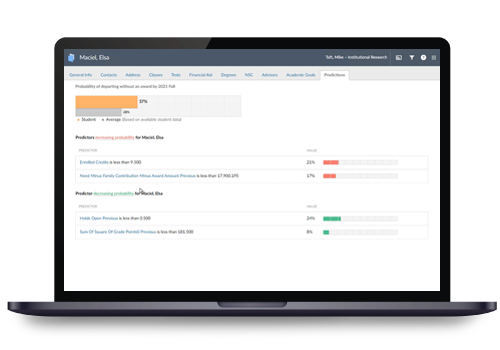
Yet many institutions have data spread across various systems, from student information systems (SIS) to learning management systems (LMS) and financial aid databases. These disparate data sources make it difficult to get a holistic view of student progress and institutional performance.
Many colleges don't have the data or predictive analytics capabilities to identify which students are at risk of dropping out or failing to graduate, limiting their ability to intervene early enough to have an impact.
Community colleges serve a diverse student body, including many non-traditional students who may face unique challenges - such as balancing education with work or family responsibilities, or requiring remedial education to prepare for college-level coursework. Providing targeted support services based on data insights can help, but most institutions lack the resources to develop and maintain these services.
Community colleges typically operate with limited resources, both in terms of finances and staff. Combined with limited data, these institutions find it impossible to prioritize the interventions, support services, and other initiatives that will have the biggest impact on graduation rates.
Developing effective strategies for retaining students until graduation involves understanding the myriad reasons students may drop out, from academic challenges to financial difficulties. Data can help identify trends and patterns, but implementing effective retention strategies also requires comprehensive support services.
ZogoTech can integrate data from various sources to provide a comprehensive view of each student, covering academic performance, engagement levels, financial aid, and more. This helps institutions understand individual student needs and challenges.
By analyzing student data, the platform can identify students at risk of dropping out or failing. Early intervention can then be taken to provide support, whether it's academic counseling, tutoring, or other resources.
By assessing past data, ZogoTech can help institutions predict which students might face challenges in completing their degrees. This predictive insight allows colleges to proactively offer support to these students.
Understanding student engagement, whether it's participation in campus events, utilization of campus resources, or involvement in clubs, can provide insights into their likelihood of persisting to graduation.
Data analytics can reveal which courses or sequences of courses have higher drop rates or are barriers to completion. Institutions can then consider curriculum modifications or additional support structures for these challenging areas.
By understanding which support services (like tutoring, counseling, or financial aid advising) are most effective, colleges can invest more in those areas and refine or revamp less effective services.
Understanding student engagement, whether it's participation in campus events, utilization of campus resources, or involvement in clubs, can provide insights into their likelihood of persisting to graduation.
By tracking the success of graduates in the workforce or in further education, community colleges can gain insights into how well their programs prepare students and where improvements might be needed.
Data-driven insights can be shared across departments, fostering collaboration. For instance, academic departments, student affairs, and financial aid offices can work together more effectively when they have shared data insights.