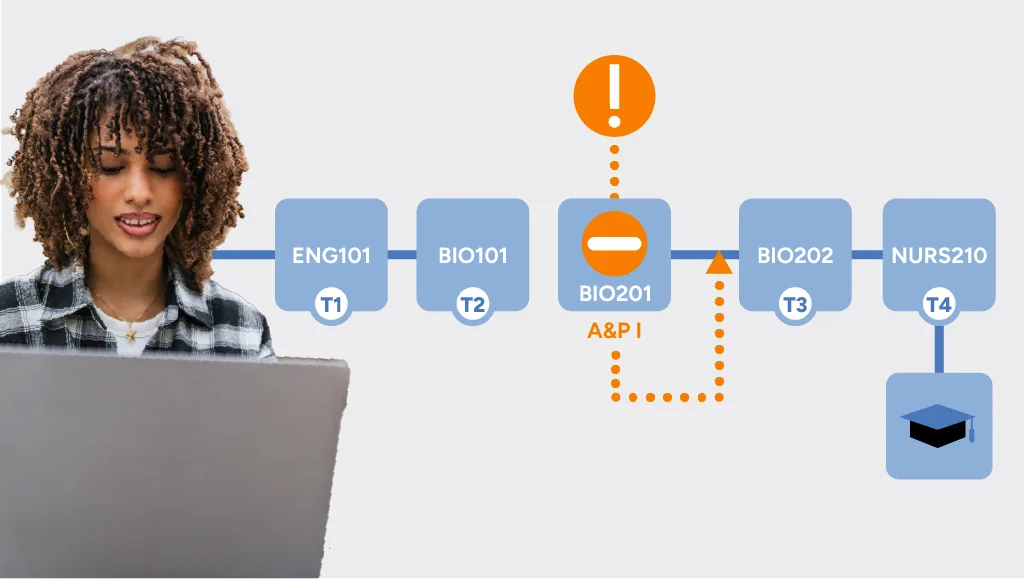
A student can do everything right and still lose a semester – because of a hold, a course that doesn’t count, or a class that isn’t offered when they need it.
November 19, 2026
1:00 PM - 2:00 PM CDT
Many lost semesters don’t start with a struggling student. They start with the path itself. An orientation that informs but never connects. An advising model where no one owns the student’s plan. A registration hold that blocks the next step. A gateway course that stalls an entire program. A course the program map says to take that isn’t on the schedule. None of these is a student problem. They’re built into how the college works, which means the college can redesign them.
The goal is a path that gives every student a clear, reliable next step, from their first week through registration for the next term, without a detour they never chose.
In this panel discussion, three community college leaders share the structural changes behind their progress: a rebuilt orientation, a new advising model, fewer registration barriers, redesigned gateway courses, and course schedules checked against the program maps students follow.
Panelists
Jessica Baker
Director, Success Coach Stanly Community College
Dr. Danny Hoey, Jr.
Vice President, Student Affairs Delaware County Community College
Dustin Maroney
Executive Director of Institutional Effectiveness Central Arizona College
What You'll Learn
How to design orientation and the first weeks so new students build the connections that bring them back.
How a single point of contact and required advising put every student on a plan, in courses that count and sections that fit.
How to remove the policies and course barriers that stall progress, from registration holds to low-success gateway courses.
How to check your course schedule against your program maps, so every course students are told to take is actually offered.
How one college-wide goal gets every department, from advising to faculty, building part of the path.