December 6-9, 2025
Music City Center | Nashville, TN
Booth 524
Odessa College has demonstrated that you don’t need a complex system to dramatically improve student outcomes – you need consistent, intentional human connection. Through its Drop Rate Improvement Program, the college saw a 7% drop rate reduction, a 22% increase in success rates, and a 253% increase in annual graduates since its inception. At the heart of this transformation are a set of simple but powerful faculty commitments: learn student names, check in regularly, hold one-on-one meetings, and balance structure with flexibility. This session will explore how Odessa used data to identify high-impact faculty behaviors, how they scaled those practices across the institution, and how any college can build a culture where belonging, engagement, and trust fuel student persistence and completion.

Colleges are required to disaggregate student success data by “appropriate demographics” (Standard 8.1), which typically means race/ethnicity and gender, but Anti-DEI rules and laws are restricting or prohibiting the use of race/ethnicity and gender to address student success gaps. The Economic Hardship Index is a useful alternative and is a composite of six parameters that avoid race/ethnicity and gender: poverty rate, per capita income, educational attainment, unemployment, dependency and crowded housing. The Index can be calculated for each student based on their home address and publicly available data from the US Census. This session will show how the Economic Hardship Index is calculated and provide examples of how it is being used at Lee College to drive student success initiatives.

How do you design a system of support that keeps students on track – academically, personally, and beyond completion? At Odessa College, that question sparked a rethinking of how support is delivered, aligned, and activated across the student journey. Using predictive modeling and behavioral data, the college identifies early signs of disengagement and connects students with targeted interventions, whether academic assistance, personalized college life support, or post-completion planning. Support is triangulated across multiple roles to ensure no student falls through the cracks. Momentum milestone data fuels proactive strategies grounded in the real lives of today’s learners – many of whom are part-time, working, or parenting. This session offers a practical framework for institutions ready to move beyond fragmented advising and toward a unified, data-informed approach that drives measurable outcomes.
With increasing pressure to improve student outcomes and funding tied to completion metrics, North Central Texas College launched a Title V initiative to redefine how the institution supports student success. This session will share how NCTC created strong, replicable collaboration between student services and instruction to support credential attainment and close performance gaps. Attendees will learn how the college implemented multi-faceted academic and career coaching, expanded course accessibility through redesigned modalities, and built a centralized dashboard to track outcomes and guide improvements. With a focus on reaching underserved students, this session offers a practical blueprint for using cross-functional teams, shared data, and coordinated student support to increase core course completion, credentialing, and graduation rates – all without adding more burden to overextended institutional research teams.
Join this session to:

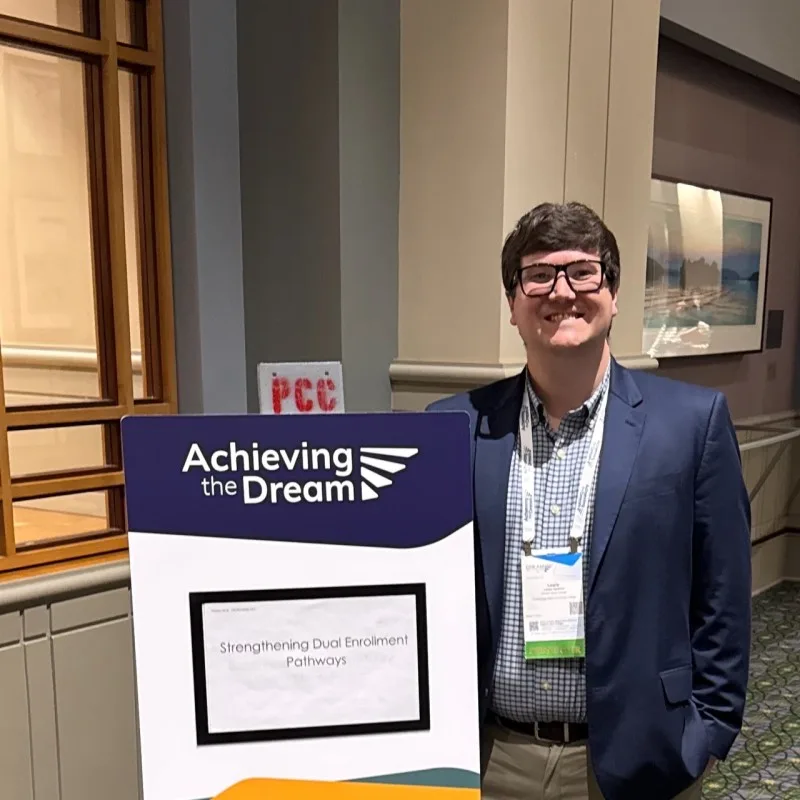
In a time of accelerated change and increasing demand for equitable student success outcomes, Chattanooga State Community College designed an Early College Master Plan to transform dual enrollment programming into a high-impact, data-informed institutional priority. This session details how student, academic and institutional effectiveness leaders partnered to conduct an environmental scan, align data systems with strategic goals, and use PDCA cycles to guide iterative planning and execution. Presenters will share a replicable framework for turning disparate information – on faculty support, pathway access, enrollment barriers, and instructional site capacity – into a cohesive, living plan monitored through a centralized student success data warehouse. The session will emphasize democratization of data, alignment with regional workforce goals, and transparency with internal and external stakeholders.
By the end of this session, participants will be able to:
Describe how to conduct an internal environmental scan of dual enrollment programs using institutional data tools.
Apply the PDCA cycle to structure an actionable and iterative Early College master plan.
Identify strategies to promote transparency and stakeholder engagement through democratized access to data.
Recognize common implementation challenges and adaptive strategies for scaling dual enrollment pathways.

How closely is student success on course learning outcomes connected to overall course performance? This session explores a data-informed approach used at Alvin Community College to examine the relationship between learning outcome achievement and course success at the individual student level. The analysis linked student achievement on course learning outcomes with final grades to uncover patterns and barriers to success. Using program data, the presenters created a process to identify specific course-level barriers — or “micro barriers” — that prevent students from demonstrating key skills needed for success. Attendees will learn how this analysis was conducted, what the results revealed, and how the findings are being used to support program
improvement and student success.