Artificial intelligence (AI), predictive analytics, and business intelligence (BI) tools promise to revolutionize how community colleges improve student outcomes and operational efficiency. Leaders envision using AI to pinpoint at-risk students early, or deploying advanced dashboards to inform every decision. This vision is compelling – imagine real-time alerts enabling an advisor to intervene before a student falls behind, or predictive models optimizing course offerings each term. However, the reality on many campuses is that the data needed to power such tools is fragmented and unreliable. The old adage “garbage in, garbage out” holds: without a strong data foundation, even the most advanced AI or analytics tool will underperform. In fact, a recent Gartner, Inc. survey found that through 2026, 60% of AI projects will be abandoned if they aren’t supported by “AI-ready” data.
Community colleges must first get their data house in order – integrating siloed systems, ensuring real-time access, and establishing data governance – before layering on sophisticated analytics. As an EDUCAUSE review observed, data management, integration, and governance are foundational challenges that, once addressed, empower leaders to use analytics to drive investments in student and institutional success. In short, the path to a high-tech, data-driven future starts with the basics.
The Challenges of Fragmented Systems and Siloed Data
Before adopting AI or fancy analytics, college leaders need to confront common data challenges head-on. Many community colleges struggle with:
Fragmented Systems and Data Silos: Different departments use disconnected systems (SIS, LMS, CRM, etc.), each holding pieces of student and institutional data. This lack of integration means no one has a complete picture. Leadership might see enrollment trends in one system and advising notes in another, but without a unified view critical insights fall through the cracks. These silos create redundancies and inefficiencies, as staff spend hours manually reconciling reports from multiple databases. Worse, important patterns (like a combination of academic, financial, and engagement risks in one student) remain hidden in the noise. When leadership lacks a comprehensive, real-time view of institutional performance, the result is missed opportunities for intervention and errors in planning.
Lack of Real-Time Data: Many colleges rely on static, end-of-term reports or spreadsheets compiled long after events have occurred. By the time data is available, it’s too late to act. Without real-time or up-to-date data flows, advisors might only discover a student’s struggles at semester’s end, missing the window to help. Real-time analytics are crucial – research notes that timely data helps student success teams identify at-risk students quickly and verify if interventions work. In fast-moving situations (enrollment surges, emerging equity gaps, funding formula changes), delayed data equals delayed response.
Inconsistent Data Definitions and “Multiple Versions of the Truth”: A lack of college-wide data governance means different offices define and calculate key metrics differently. One department’s retention rate might exclude certain student groups while others include them, leading to conflicting reports and confusion. Inconsistent data across silos means each part of the institution may have its own truth, causing discrepancies and mistrust. Without standard definitions and a single source of truth, even basic questions (e.g. “What is our fall-to-spring retention rate?”) can yield multiple answers. This erodes confidence in data and in any analytics built on that data.
Institutional Silos and Overburdened Teams: Fragmented data often mirrors organizational silos. Institutional Research (IR) and IT teams become bottlenecks, as they’re constantly fielding ad-hoc data requests from every corner of campus. With data locked away in departmental systems, frontline staff (advisors, faculty, student services) must ask IR for every report. This not only overwhelms IR/IT (leaving little time for strategic analysis), but also frustrates end users who wait weeks for answers. Critical decisions are slowed down, and a culture develops where data is seen as “someone else’s job.” Additionally, because data skills and access are concentrated in a few offices, opportunities for innovative data use by faculty or student services are limited. All of this reinforces a status quo where data is “rich” but insights are poor, and advanced tools can’t gain traction.
Inaccurate or Outdated Data: Even when systems are integrated, the insights produced are only as reliable as the data itself. Unfortunately, many community colleges unknowingly operate with outdated or incomplete student records. A common example is declared majors – nationally, around 80% of students change majors at least once, yet many institutions fail to capture these updates in a timely manner. When critical fields like major, degree intent, or academic plan are incorrect, downstream processes – such as advising, course planning, or retention analytics – can be based on faulty assumptions. This leads to inefficiencies, poor resource allocation, and misguided interventions. Data integrity issues like these often go unnoticed until they undermine confidence in analytics across the institution.
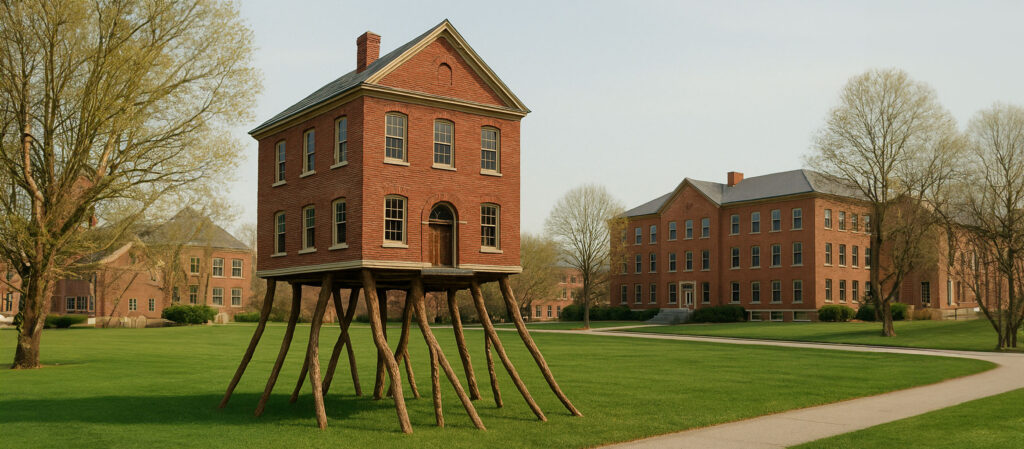
These challenges underscore why jumping straight to AI or BI tools can backfire. If you layer expensive predictive analytics on top of fragmented, stale, or inconsistent data, you risk getting misleading results – or no useful results at all. It’s like trying to build a skyscraper on a shaky foundation. A strong data foundation is needed to support the weight of advanced analytics.
Laying the Data Foundation to Advance College Goals
Investing in data fundamentals isn’t just an IT concern – it’s a strategic imperative tied directly to the college’s mission and goals. Community college leaders are striving to increase student retention, close equity gaps, respond to performance-based funding metrics, and streamline operations. Each of these goals benefits from (and arguably requires) robust data infrastructure:
Student Retention and Success: Every percentage point improvement in retention represents real students persisting toward their goals. Early-alert systems and predictive models often promise to help here – but they’re only as good as the data feeding them. A strong data foundation integrates data from academics, attendance, LMS engagement, advising, and even financial aid, giving a 360° view of each student. With that, colleges can identify at-risk students early (for example, a student with declining LMS activity and an outstanding bursar balance) and intervene with personalized support. Research confirms that real-time, integrated data enables quicker interventions and ongoing monitoring of whether those interventions work. In practice, colleges that unified their data have seen proactive advising become possible at scale, instead of reactive outreach when it’s too late. The result is more students staying on track.
Identifying and Addressing Performance Gaps: Community colleges serve students with a wide range of academic backgrounds, life experiences, and support needs. A key to improving student success is identifying where performance gaps exist – whether in course completion, retention, or degree attainment – and acting swiftly to address them. A unified data system allows colleges to disaggregate metrics in real time and identify patterns across student populations. For instance, if part-time evening students are consistently struggling in gateway math courses, that insight can prompt targeted scheduling or academic support. When data is integrated and consistently defined, institutions are better equipped to identify areas of underperformance, target resources where they are needed most, and measure the impact of those efforts.
Performance-Based Funding and Compliance: For the more than 30 states that have instituted performance-based funding metrics (especially for community colleges), having accurate, timely data is literally tied to budget. Colleges must track indicators like course completions, graduations, transfer rates, and success of low-income or minority students – not just for internal improvement, but to secure critical funding. A strong data foundation ensures that these metrics are consistent, easily calculable, and available on demand. Instead of scrambling each quarter to pull data from various offices for state reports, an integrated data platform can generate performance funding dashboards at a click, with confidence that the numbers are correct. This not only helps in compliance and reporting efficiency, it allows leadership to continuously monitor where they stand on funding-related targets (e.g. seeing mid-year if interventions are boosting completion rates). In an era of tight budgets, directing resources effectively depends on data – colleges can’t afford to make budgeting and program decisions based on hunches or outdated figures. A solid data foundation provides the evidence needed to prioritize investments that move the needle on student success (and thus funding).
Efficient Reporting and Decision-Making: Beyond student outcomes, a data foundation streamlines day-to-day and strategic decision processes. When systems are integrated and governed, routine reports (enrollment trends, course fill rates, financial projections) can be generated quickly and accurately, freeing staff from manual number-crunching. IR professionals, for instance, can spend less time cleaning data and more time analyzing it. Meanwhile, college Presidents and Cabinet leaders can get a single, trusted dashboard of key performance indicators rather than piecemeal reports from each department. This unified view supports more agile decision-making. Leaders can respond to emerging issues – say, a dip in adult student enrollment or a decline in a program’s outcomes – with timely strategy adjustments, because they aren’t waiting weeks for data assembly. In short, decisions start to be driven by data rather than anecdotes. The entire institution becomes more data-informed, which is essential before truly embracing AI and advanced analytics. After all, an AI recommendation engine or a predictive model will be most useful in an environment where data flows are continuous and stakeholders trust the insights.
Key Pillars of a Strong Data Foundation
Building a robust data foundation may sound abstract, but it boils down to a few concrete pillars. Community college leaders should focus on the following key elements to prepare their campus for advanced analytics:
Data Integration and a Single Source of Truth: Integrate first, analyze second. Break down the silos by consolidating data from disparate systems into one platform or warehouse. This doesn’t mean ripping out all existing systems, but rather connecting them so information flows into a unified repository. The goal is one version of the truth for critical metrics – everyone from the registrar to the advising office draws from the same data well. Integration can be achieved through modern data platforms or middleware that ensure SIS, LMS, CRM, and other databases talk to each other. The benefits are immense: instead of fragmented snapshots, leaders get a holistic view of student and institutional data in one place. For AI and predictive tools, integrated data is non-negotiable – it ensures models train on complete, comprehensive datasets rather than narrow slices. By investing in integration, colleges lay the groundwork for any future analytics to be truly effective.
Real-Time (or Right-Time) Data Access: In today’s fast-paced environment, data that’s months old has limited value. Colleges should aim for real-time or near-real-time data access for key indicators. Real-time doesn’t mean every piece of data updates instantly, but focus is on the areas where immediacy matters: enrollment numbers during registration periods, early alerts for attendance/grades, financial aid status changes, etc. By having up-to-date data readily available, faculty and staff can act at the moment of need – reaching out to a student after two missed classes, or opening a new course section when waitlists spike. Real-time analytics help institutions intervene more quickly with at-risk students, which can directly boost retention. The culture shift here is from retrospective reporting to proactive monitoring. When data flows continuously, the college moves with agility: interventions are preventive rather than reactive, and opportunities can be seized in real time. This pillar is crucial before implementing AI, because many AI-driven processes (like adaptive learning or chatbots) assume data is current. In essence, timely data is the lifeblood that keeps advanced tools relevant and actionable.
Ongoing Data Accuracy and Integrity: A strong data foundation isn’t just about connecting systems – it’s about ensuring the data itself reflects current, accurate information. This requires both technical solutions and process discipline. Institutions should establish routines to validate and audit critical fields such as program of study, degree intent, and enrollment status. For example, colleges may supplement official records with inferred fields – like ZogoTech’s “apparent major” – to fill gaps where students’ actual course-taking behavior doesn’t match outdated declarations. These logic-based insights don’t rely on AI but can still significantly enhance decision-making. Maintaining accuracy also means engaging departments responsible for data entry and building feedback loops that catch errors early. The more confidence users have in the underlying data, the more likely they are to trust and act on the insights that emerge from it.
Robust Data Governance and Data Quality: Technology alone won’t fix data chaos; colleges also need governance – the human and policy aspect of data management. Establish a cross-functional data governance team or committee that brings together IR, IT, student services, academic affairs, and other stakeholders. This team’s mandate is to define and document consistent data definitions (what counts as “full-time”, how exactly “student success” metrics are calculated, etc.), set policies for data usage, and ensure data quality standards. Creating a unified data dictionary shared campus-wide can eliminate misunderstandings and ensure everyone speaks the same language of data. Governance also covers access control and privacy compliance (FERPA, etc.), making sure data is shared safely and ethically. Without this framework, even a well-integrated system can devolve into confusion or misuse. Standardization is key – getting all departments to rely on the same metrics eliminates confusion and streamlines support efforts, enabling faster, better decisions. Good governance also assigns data stewards for different domains (enrollment, finance, etc.) who take ownership of data accuracy. The result is higher trust in the data: leadership and staff can confidently act on insights knowing the numbers are vetted and consistent. This trust is critical when you introduce predictive analytics; people will rightly be skeptical of AI outputs if basic data is disputed. Thus, data governance and quality control are non-negotiable pillars of the foundation. Clean, well-defined data is the soil in which advanced analytics will either flourish or wither.
Empowering End Users with Accessible Insights: Finally, a strong data foundation is about people. It’s not enough to centralize and clean the data; it must be delivered into the hands of those who need it in an intuitive way. That means developing user-friendly dashboards, self-service analytics tools, or “personalized research assistants” for faculty, advisors, and administrators. The aim is to democratize data access – breaking the dependency on IR for every query. When advisors can pull up a dashboard of their caseload’s key metrics, or faculty can easily track how their course interventions impact student outcomes, data becomes embedded in daily decision-making. With training and a supportive culture, even non-technical staff can learn to explore data and extract actionable insights. This pillar may involve investing in BI tools or analytics platforms that emphasize ease of use and interactive exploration. The payoff is huge: IR teams are freed to focus on complex analyses rather than routine reporting, and frontline staff can make data-informed decisions on the fly. Over time, the institution cultivates a data-informed culture where decisions at all levels are backed by evidence. This cultural shift is part of the foundation – people and technology together. Only when end users are empowered to use data will the full value of AI and analytics be realized. After all, predictive models and dashboards are only impactful if people actually use them to change practices. By training staff and encouraging curiosity, colleges ensure that the shiny new AI tools won’t sit on a shelf, but will actively drive improvement.
Conclusion: From Foundations to Transformation
Adopting advanced AI, predictive analytics, or BI without a solid data foundation is like trying to install a state-of-the-art roof on a house with crumbling walls. Forward-thinking community college leaders understand that the foundation comes first. By investing in data integration, real-time access, governance, and user empowerment, institutions create the conditions for advanced tools to succeed. The tone here is both visionary and practical: visionary in seeing a future where data and AI drive unprecedented gains in student success and institutional effectiveness, but practical in recognizing the groundwork required today. The good news is that this groundwork pays dividends immediately. Even before AI delivers its first prediction, an integrated and well-governed data environment will start yielding clearer reports, faster decisions, and more alignment across campus. It directly addresses current challenges – breaking down silos, providing a single source of truth, and enabling a data-driven culture. And once those advanced analytics tools are brought on, they will operate on fertile soil, amplifying insights rather than struggling to make sense of messy inputs.
In sum, building a strong data foundation is not a detour on the road to innovation; it is the road. It ensures that when community colleges do implement AI or predictive platforms, they are leveraging them to their fullest potential – targeting resources where they have the most impact on equity and success, meeting funding and compliance demands with confidence, and continually refining strategies based on what the data (trusted, timely, and transparent) tells them. By getting the data basics right, community colleges set themselves up to truly become data-empowered institutions ready to harness the next generation of analytical tools for the betterment of their students and communities.